


Individuals who endured sexual abuse by Catholic clergy have voiced fresh optimism after their initial encounter with the new Pope at the Vatican.
The board president, heading the anti-abuse organization, stated that the Pope's decision to meet with them so soon in his papacy spoke volumes about his dedication to tackling the problem.
Global Zero-Tolerance Approach Advocated
The organization is advocating for a worldwide strict approach that would defrock any clergy member who confesses to or is found guilty of abusing a child. This policy has already been adopted in the United States.
The Pope recognized that there is "opposition in certain regions of the globe" to this initiative, according to the representative.
"We were all being realistic when we acknowledged that there is resistance," they remarked.
Legacy Challenge
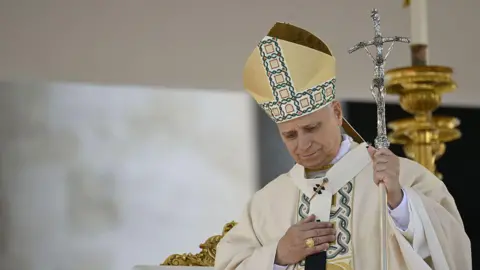
The new Pope, who took the position in May, has inherited this persistent problem that has plagued the Church for many years.
Earlier attempts to resolve the situation included an historic summit on child abuse within the institution and revisions to church laws to explicitly criminalize abuse.
Personal Link
For the representative, who uses they/them pronouns, the campaign for global implementation of the policy is personal. The Canadian advocate shared they were abused by a priest who was subsequently moved between different parishes.
"We trust this will establish the direction for his leadership, because we aim to work with him," they stated. "Both sides share the common objective, we want to eliminate abuse by religious officials."
Historic Meeting
Seven representatives of the coalition, which represents victims and supporters from more than 30 countries, engaged with the Pope in his official residence.
The discussion, initially planned for a brief period, extended to a sixty minutes, during which the religious leader "primarily heard to us," according to Hickey.
The pontiff was characterized as "very understanding" when listening to the account of a female survivor abused at a Catholic residential school for native youth in Canada.
Hickey noted the Pope was "compassionate" about their personal experience and seemed "modest, funny, and approachable."
"Survivors have consistently sought a voice in discussions and I didn't perceive like he was giving us lip service," they commented. "I felt like he was sincere, practical, and very open and eager to collaborate with us."
Canon Law Reforms
The group is advocating that changes to canon law will enable the implementation of the strict approach worldwide.
They have consulted experts and compiled documents that they will present to the pontiff.
"He appeared interested in looking at it," Hickey noted.
Responsibility Highlighted
A recent church-ordered document emphasized the "necessity of a efficient process for the stepping down and/or dismissal of religious officials or personnel in cases of misconduct or failure to act."
The report also pointed out that victims repeatedly stressed the "urgent need for bishops and major superiors to be made responsible for inaction and concealment."
Path Ahead
Hickey shared they told the Pope at the beginning of their discussion: "This represents as much a risk for him to participate in a conversation as it was for us."
After the encounter, Hickey expressed optimism for future change.
"We realise it's not something that's going to be resolved quickly, but at the end of the day, coming together and building a relationship and persisting to strengthen that relationship is a step in the right direction," Hickey commented.
They concluded that they shared with Pope Leo: "Just because it's a difficult period, I feel like we can change how the story concludes - he valued that."
